Humidity Finally Got Me.
06/13/2026
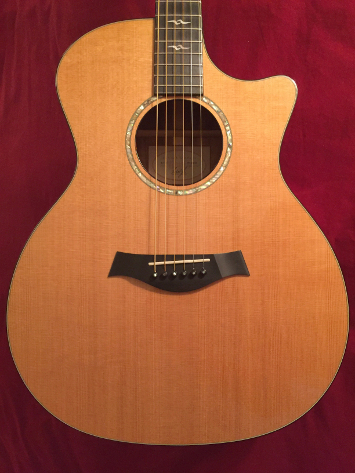
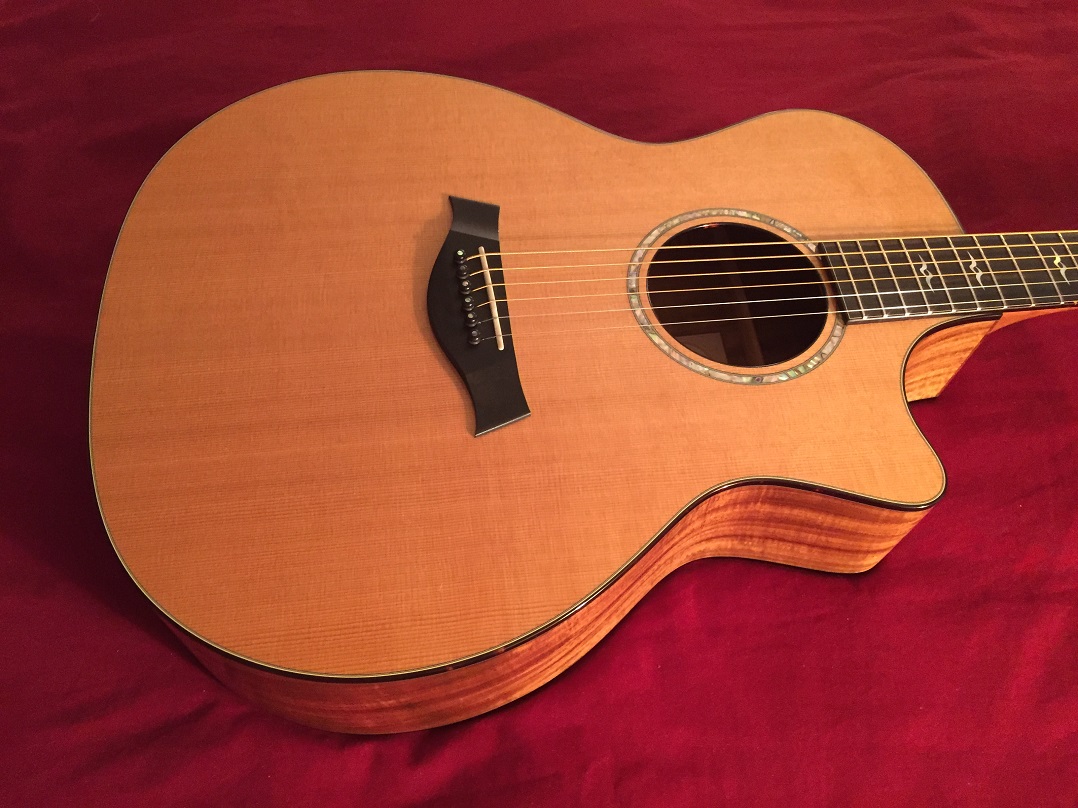
I take pretty good care of my guitars. I've got hygrometers in the cases of the most expensive ones and in the guitar room. I watch my home's humidity on my iPhone remote heat pump thermostat app like a hawk when it starts to get cool to know when to start humidifying the guitars. This past winter, the indications were that I had been keeping the humidity in the right range. But a couple of weeks ago, with the house at 55%, I pulled out my 1999 Taylor K14c from the case to play and felt sharp little edges on the frets biting me. Uh-oh.
There were no signs of cracks or a sunken top, just the protruding frets. I quickly checked all of my guitars and found that this one was the only casualty. This guitar is a "commemorative" guitar, bought for me by my lovely wife to celebrate our twentieth anniversary. Three years ago I had it refretted by my luthier, Kenny Marshall, with stainless steel frets, and he did a marvelous job. This is the only humidity casualty I've had in fifty-six years of playing, but we had a spell in late spring with temperatures alternating betwen the high thirties and low eighties on succeeding days and this lasted for several weeks. I'm guessing somewhere in there we got a cold dry snap that dried out the guitar. This despite the fact that the hydrometer in the case read 47%. I called my luthier, Kenny Marshall, and asked for an appointment. He suggested that I start humidifying the guitar again for a week and then bring it in, today, Saturday June 13th.
Over the intervening week the humidification mollified things a bit, but nevertheless, because I love this guitar and what it represents, my wife and I made holy pilgrimage across the bay to Kenny's shop. Once again, to encounter less traffic, Google Maps suggested the western route via the Monitor-Merrimac Bridge Tunnel. Upon reaching the peninsula, it was striking to pass the shipyards with Navy ships being built and serviced. From there we went through the associated built-up residential area from World War II where the shipyard workers and officers lived. Sadly, it has now sunk into a depressed state. Then we enter a quaint little arts district with peaked roofs on all the buildings and craft style homes. From there we proceed through the modern, beautiful Christopher Newport University campus and on into the lovely quiet residential neighborhood where Kenny has placed his shop. All of this passed by our windows in about seven miles.
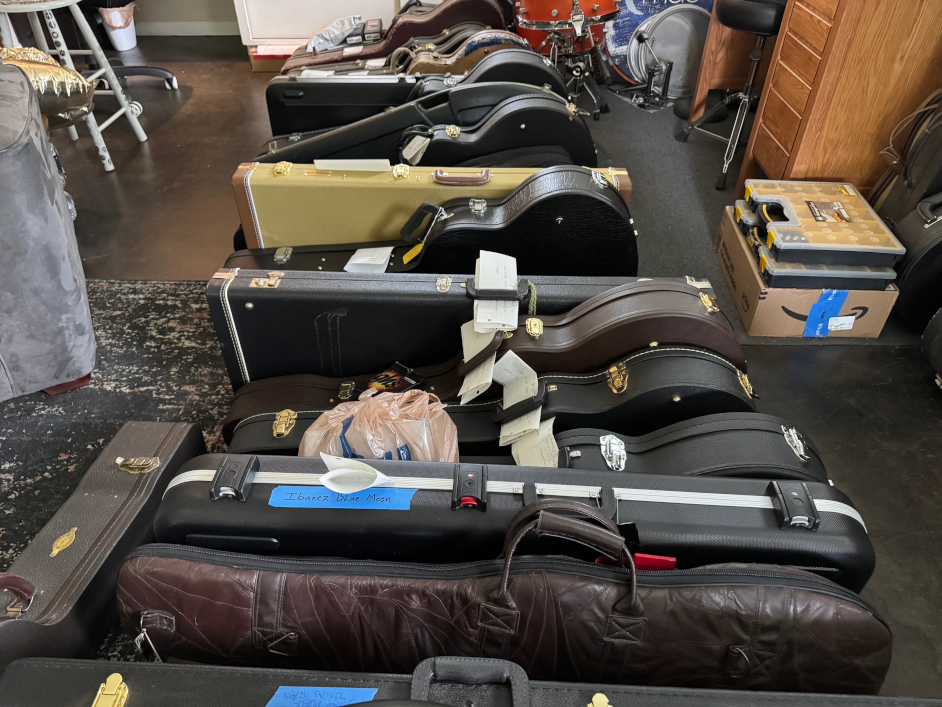
Here's about two-thirds of Kenny's backlog. Cool, huh?
As usual, Kenny was snowed under with work, and I'm glad he stays that way. He had probably forty guitars in the shop from all over the region and the country. In fact, before we got down to business, another guitarist came by and dropped off another pair of guitars, a PRS and a Fender Tele, to get Kenny's special setup and fret dressing. Once Kenny does a setup for you, you want all your guitars to feel as good as that first one he did.
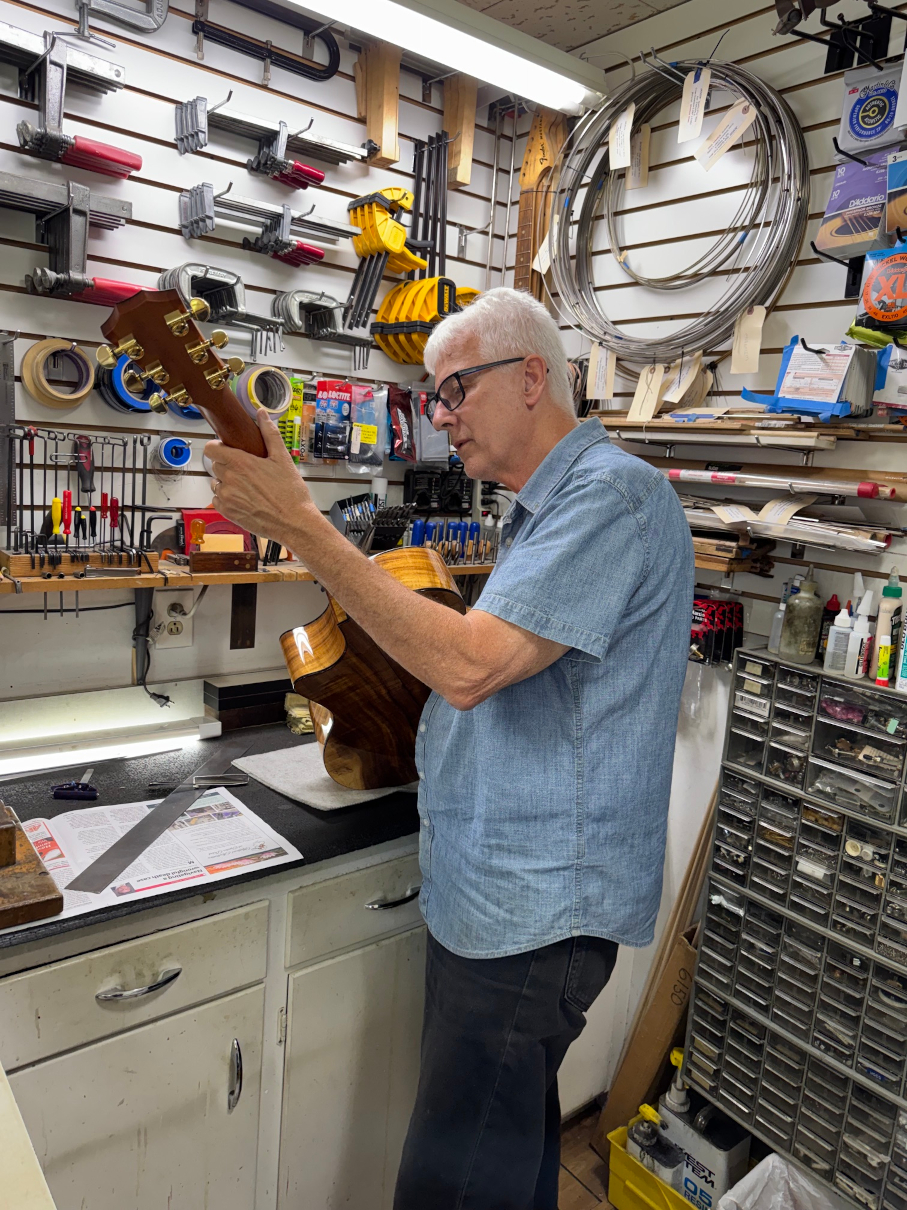
Kenny in his shop with the K14c. He not only works on guitars, he builds them.
Then Kenny turned to my guitar. He checked the action specs, the relief, and the fret ends, and said that yeah, it looked like it had gone a little low in humidity. He loosened the strings with a capo behind the nut to keep things from getting tangled, and then he got to work. First, he touched up the relief, then out came the shields, emery paper and sanding block, and fret end file. The work consisted of touching up both ends of each fret and then carefully shaping and polishing each end to make it round and smooth. It was careful, precise, time-consuming work and we passed the time by talking about guitars, guitarists, and repair. As usual, I enjoyed watching an experienced professional at work. While the strings were off, he vacuumed the soundhole, cleaned the fretboard with naptha, and oiled it. Finally, he restrung it, brought it back up to tension, gave the trussrod a little touch, and tried it out. He handed it to me and we played it back and forth a bit. It feels great again: it is back to the right action for me and has smooth fret ends.
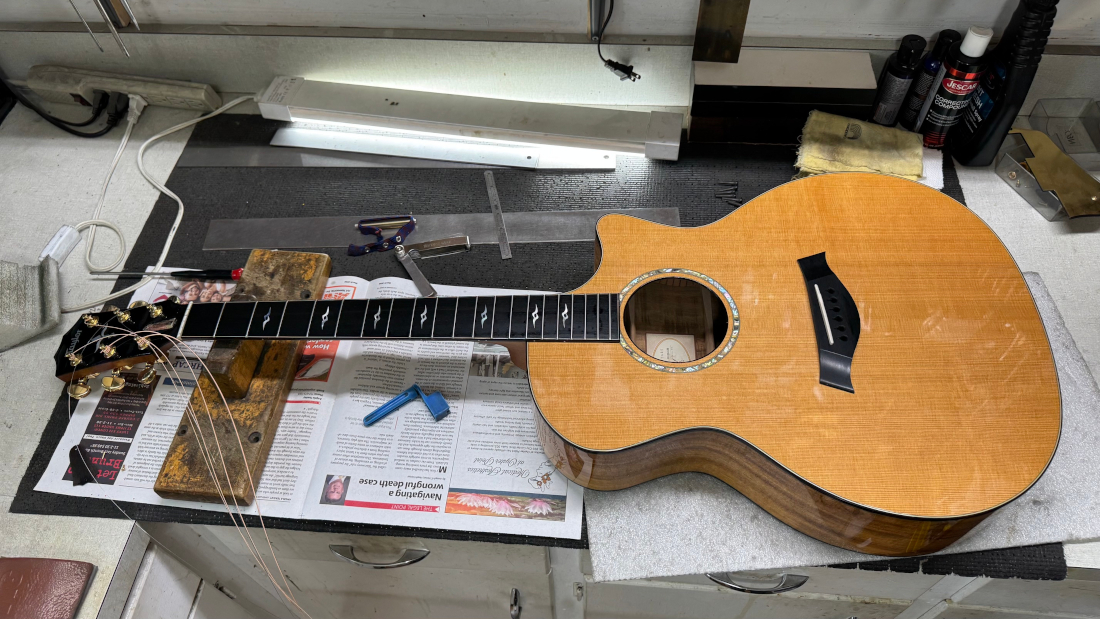
It looks a little nude, huh?
While I was at the shop I saw a nice selection of very old Brazilian rosewood acoustic guitar back and side sets. I wonder where they came from? After a little more talk, my wife and I climbed back into the car and made our way home across the bay. Once home, I took some time this evening to enjoy the guitar again. I'll continue humidifying the guitar for another week or so. I'm still wondering why just one guitar was affected, but I think the time has finally come for me to buy a humidifier for the guitar room. I've been doing the sponge-in-ziplock thing for years, but this fall I'll probably spring for an evaporative humidifier and cut down on the business of going through all the cases and refilling the sponges.
= =
=